
Mathematics
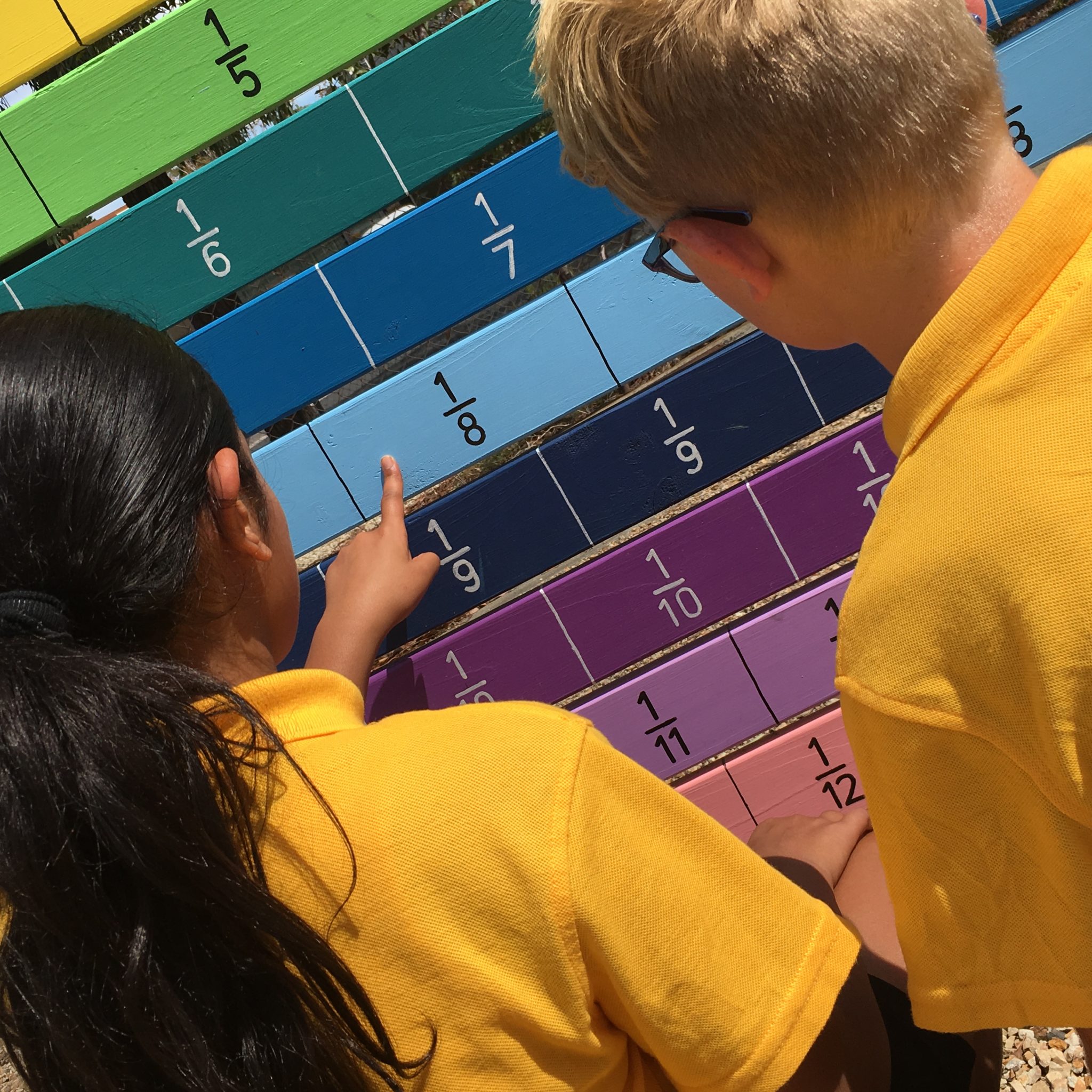 Mathematics learning supports students to develop confidence with numbers, patterns and problem solving across the primary years in a supportive and inclusive environment. Our approach to numeracy is structured and evidence informed. Teaching is planned carefully from the early years through to the later years of primary school, supporting students to build understanding at their own pace. At Rosanna Primary, we provide opportunities for students to apply their mathematical knowledge creatively and efficiently, sharpen their sense of discovery and develop an appreciation of structure. It enables teachers to help students to become self-motivated, confident learners through practice, inquiry and active participation in relevant and challenging experiences.
The Mathematics Curriculum
The mathematics curriculum draws on evidence informed teaching practices and aligns with the Victorian Curriculum. Learning focuses on developing understanding of number, algebra, measurement, space, statistics and probability (starting in grade 3).
At Rosanna Primary School we aim to:
- develop useful mathematical and numeracy skills for everyday life and work, as active and critical citizens in a technological world
- become confident, proficient, effective and adaptive users of mathematics
- become effective communicators of mathematics who can investigate, represent and interpret situations in their personal and work lives, think critically, and make choices as active, engaged, numerate citizens
- develop proficiency with mathematical concepts, skills, procedures and processes, and use them to demonstrate mastery in mathematics as they pose and solve problems, and reason with number, algebra, measurement, space, statistics and probability
- make connections between areas of mathematics and apply mathematics to model situations in various fields and disciplines
- develop a positive disposition towards mathematics, recognising it as an accessible and useful discipline to study
- appreciate mathematics as a discipline – its history, ideas, problems and applications, aesthetics and philosophy.
Mathematics Learning in our Classrooms
Students engage with a range of mathematical ideas across the primary years. Learning includes number and operations, fractions and decimals, measurement and geometry, algebraic thinking, and working with data. Concepts are revisited and built on over time, recognising that learning in mathematics is often connected and overlapping.
At Rosanna Primary School, lesson planning is underpinned by research using evidence-based learning models. Tasks are deliberately chunked into concise skills and supported with daily retrieval of previous learning.
A daily numeracy session includes explicit teaching, guided practice and opportunities to apply learning through discussion, problem solving and hands on activities.
Lessons begin with a do now task that aim to support fluent retrieval of mathematical facts and are followed by a daily review session. In this, students follow a set process that guides their space repetition of previous learnt concepts ensuring taught skills transfer to long term memory. Students then engage in a mixed mode of explicit teaching and hands on learning that focuses on collaboration.
Lessons aim to support students to practise skills, explain their thinking and build understanding gradually. Though out the lesson, teachers use regular checks for understanding and feedback to support different learning needs. Learning experiences may include using materials, visual representations and digital tools to help students make sense of mathematical ideas.
Support in Mathematics
Universal adaptations are key to learning across all curriculum areas at Rosanna Primary School. Student have access to Maths Mats, concrete materials and are supported in deliberate skill building across the lesson. As teachers check for understanding across the lesson, students are supported to ensure their understanding of a concept turns into replication and mastery of the skill.
Student who may need additional supports work 1-1 or in small group settings with our educational support staff within the classroom. Alongside this, when significant learning gaps are discovered through our ongoing assessments, students are withdrawn for intensive support to build learning skills.
Families seeking enrolment information for a primary school in Rosanna are welcome to contact Rosanna Primary School to learn more about numeracy learning from Prep to Year 6.
Frequently Asked Questions about Mathematics
What does a mathematics lesson usually include?
Mathematics lessons usually include a review of previous learning, explicit teaching of new concepts, guided practice, problem solving activities and time for independent practice.
How is mathematics taught in Prep?
In Prep, mathematics focuses on early number sense, counting, patterns, simple problem solving and learning mathematical language in a supportive, hands on environment.
Does my child need to know numbers before starting Prep?
No. Children are not expected to have formal numeracy skills before starting Prep.
Learning begins at school and builds gradually based on each child’s experience and confidence.
How do teachers support students who find maths challenging?
Teachers check understanding regularly and adjust learning by offering extra support, using different teaching approaches or providing additional practice as needed.
How are problem solving and reasoning supported?
Students are encouraged to explain their thinking, try different strategies and discuss solutions with others as part of their numeracy learning.
How can families support mathematics learning at home?
Families can support numeracy by talking about numbers in everyday situations, playing games involving counting or patterns, and staying in contact with classroom teachers.
© Rosanna Primary School